

Hunger Doesn't Stay in the Stomach: Food Insecurity, Mental Health, and a Day in Fairfax
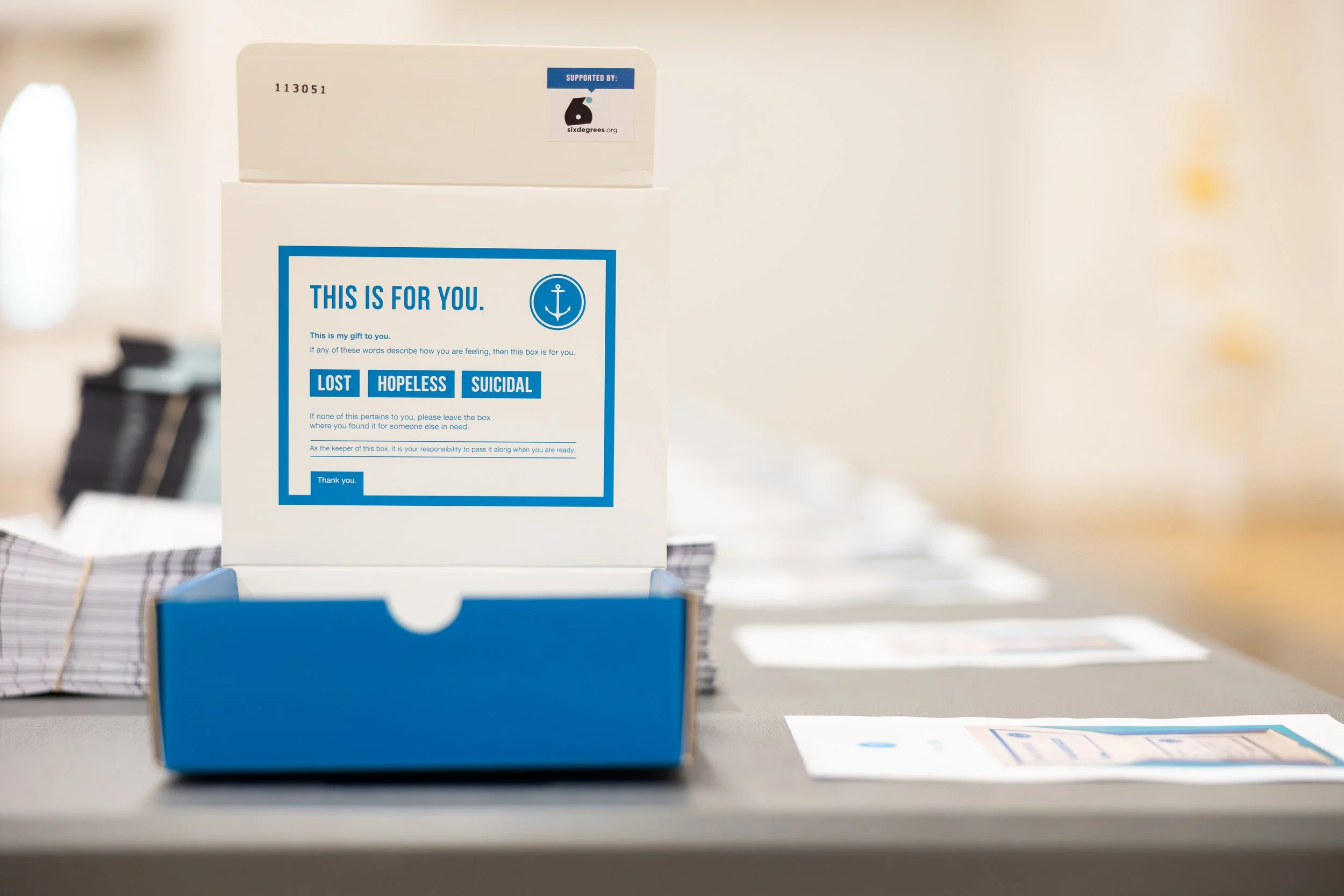
On a Sunday in mid-July, as George Mason University’s pep band, The Green Machine, played on the mezzanine in the Activities Building, the room below was abuzz with energy: children laughing, a sustainable, vegan spread of bagels and fruit set out for volunteers, strangers mingling, meals being packaged, Find Your Anchor boxes being built, blue hairnets and latex gloves throughout.
There were unscripted moments too, like how The Green Machine had quietly learned a Bacon Brothers song, just in case our founder, Kevin Bacon, showed up. He did. And for a few minutes, our founder wasn't a name on a masthead or a face on the NBC4 segment; he was just a guy with a microphone, playing alongside a college pep band who'd done their homework on the off chance they'd get to jam with him.
Small moments like that. But the day itself had a bigger purpose: a Building Kits by Kevin Bacon (BKxKB) activation, hosted at George Mason University, meant to bring two things that are usually treated separately—food insecurity and mental health—into one conversation. And this was the whole idea in action: people showing up for each other, prepared to make a stranger feel welcome, turning an ordinary room into something unforgettable.
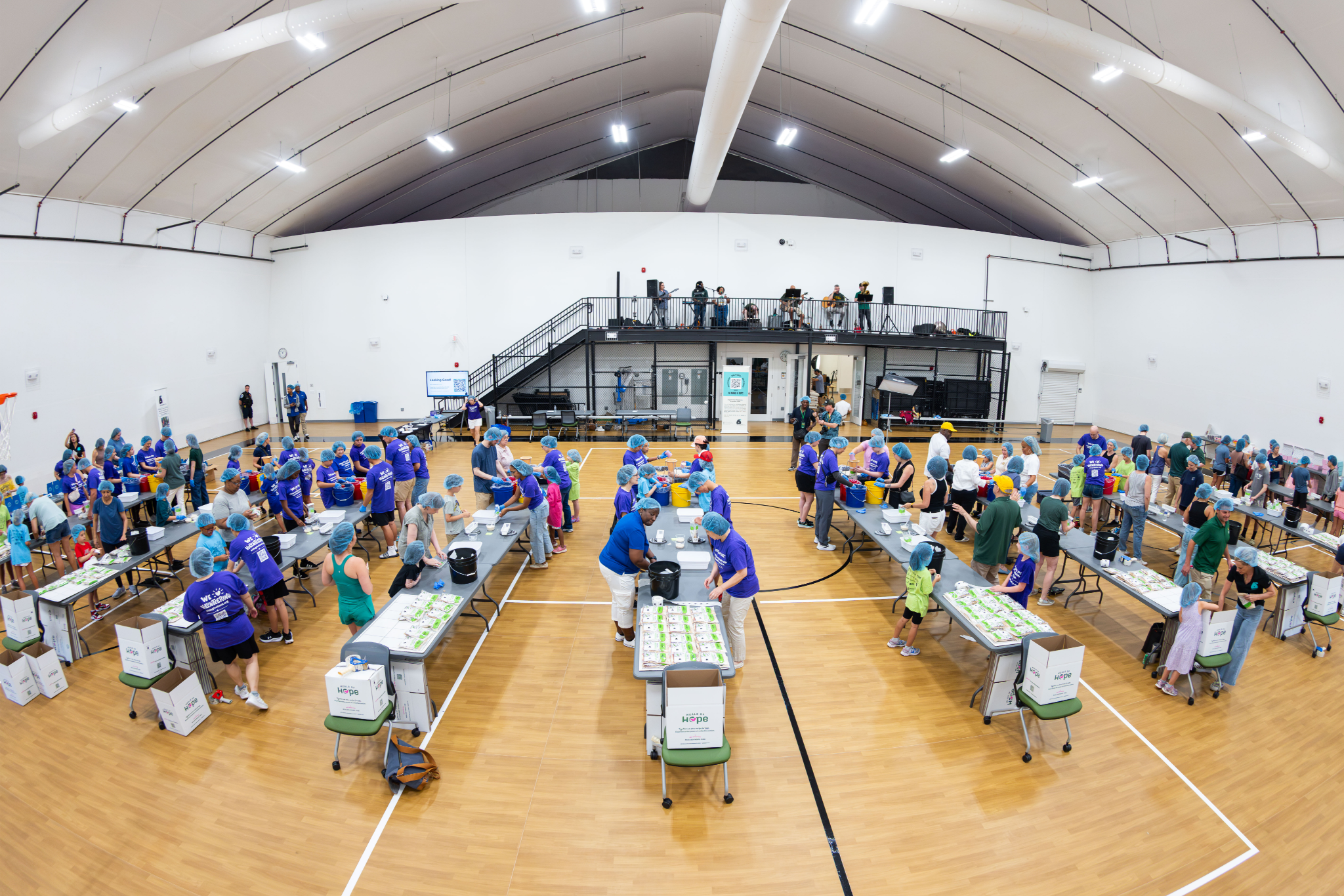
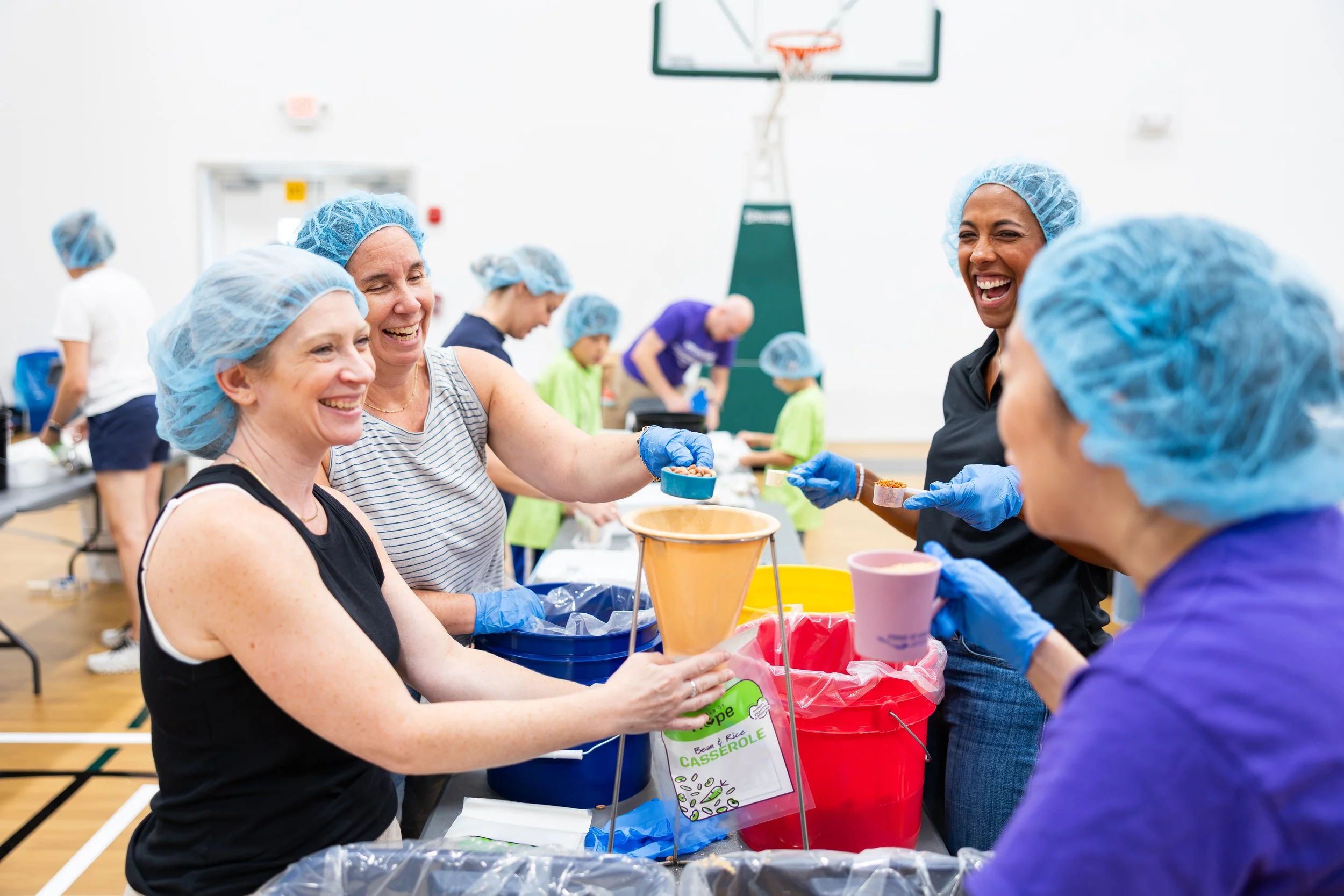
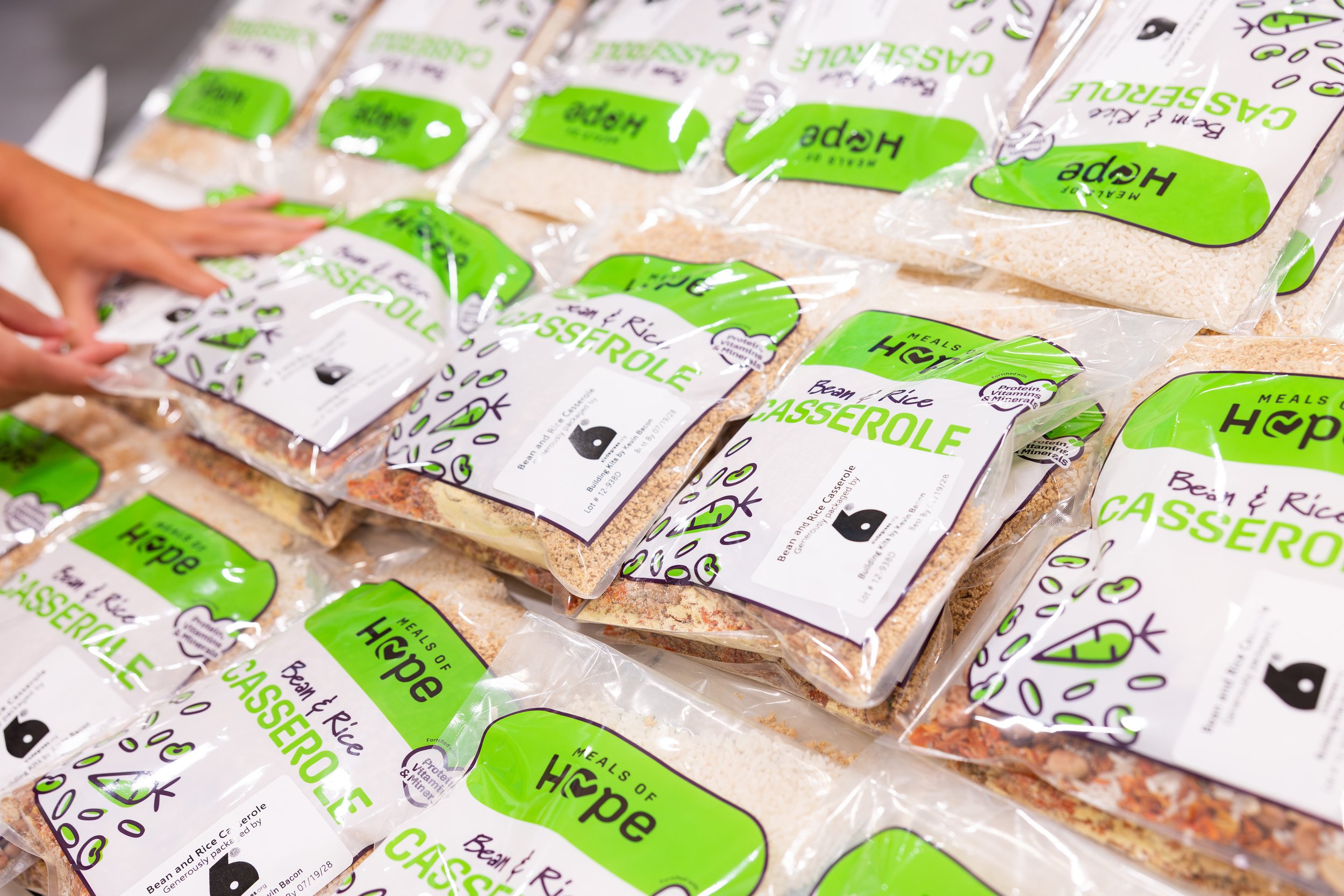
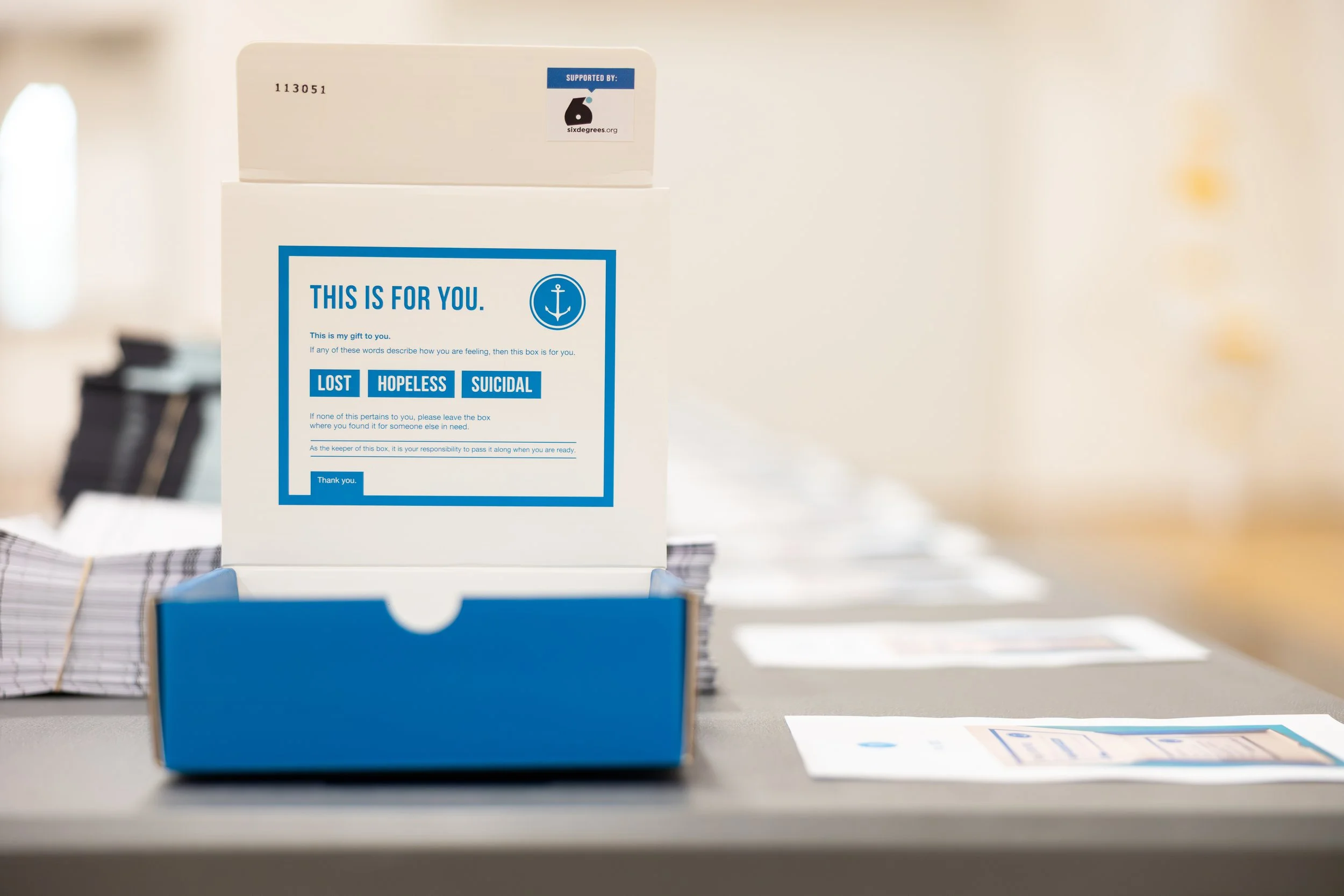
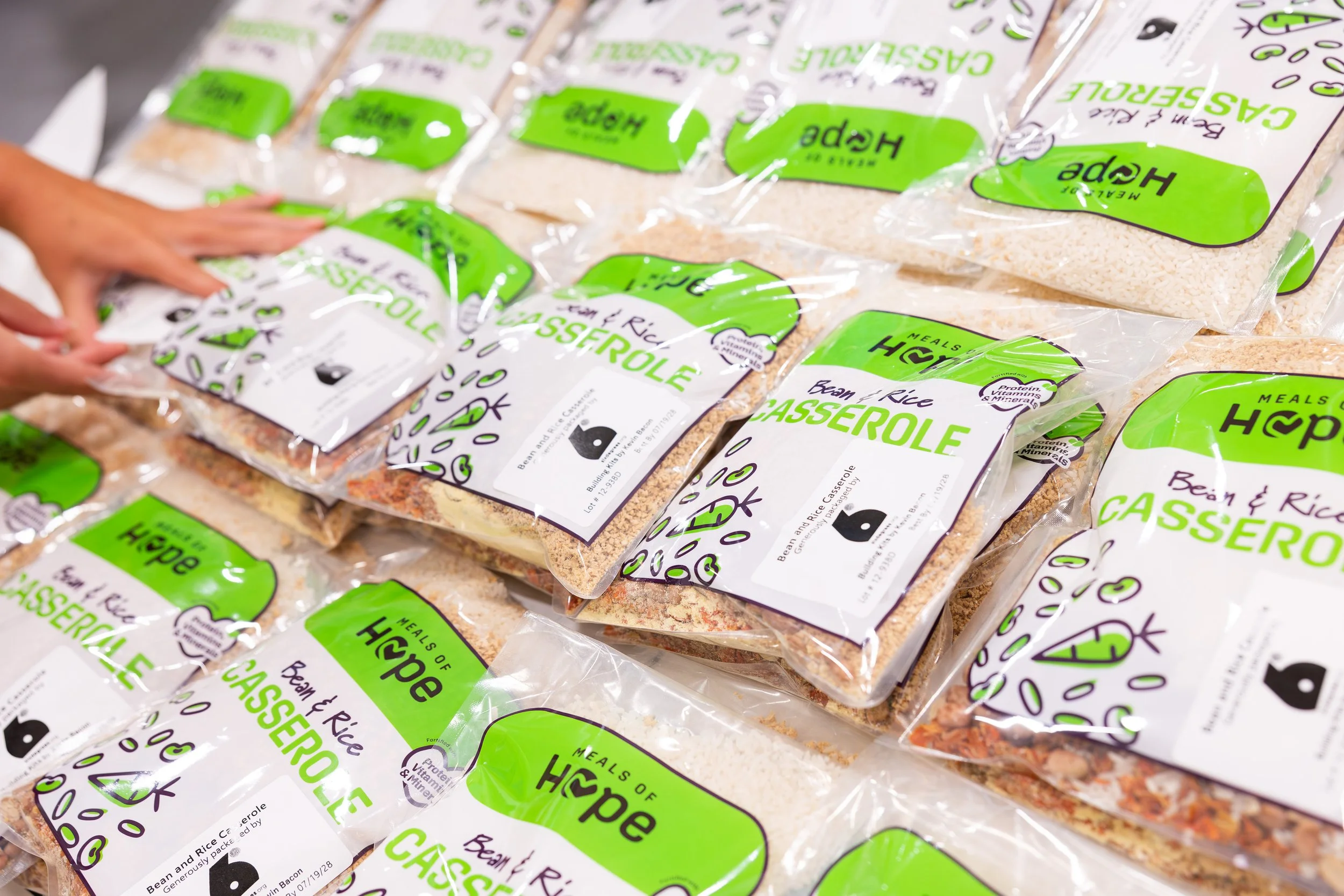
Meals of Hope ensured supplies for 35,000 sustainable meals were packed with care. Ali Borowsky of Find Your Anchor called in virtually to tell the volunteers what Find Your Anchor boxes are all about and how the hundreds of boxes packed are meant to act as a conduit to connect recipients to others, but also importantly, to the self.
And for a brief moment, the reality of this day settled in: people really have the power to change the world.
That power matters, because the need is real and growing.
But before we get to the scale of the problem, what does "food insecure" even mean?
It’s easy to picture the most extreme version of what you imagine food insecure to be: empty cupboards, no food at all.
But food insecurity is broader than that. The USDA defines it as “limited or uncertain access to enough food for an active, healthy life” (USDA, 2025). Not always going without, but not always knowing you’ll have enough.
In practice, this looks like hundreds of small compromises. Buying cheaper, less nutritious food to make the budget stretch. Skipping a meal so your kids don’t have to. Having to choose between groceries and the electric bill. It can be temporary or ongoing and reaches into households you might never expect. Most food-insecure people in our region, Fairfax County, are employed (Capital Area Food Bank, 2025).
The point is simple: hunger doesn't always look like what we assume, and that's exactly why it’s easy to miss.
Nationally, 13.7% of households faced food insecurity in 2024, which is the highest rate in a decade (USDA, 2025). And close to home, in Fairfax County, it's more than one in four households facing food insecurity (Capital Area Food Bank, 2025 Hunger Report).
We tend to think of hunger as a physical experience. But when we approach this issue from a holistic lens, we see just how tied it is to mental health.
When you're not sure where your next meal is coming from, that uncertainty follows you. It shows up at night when you can't sleep, in the morning when you can't focus, in the quiet math of deciding which bill goes unpaid this month.
Researchers have been tracking this for years, and the pattern is consistent: food insecurity is associated with higher rates of depression, anxiety, and sleep disruption among U.S. adults (Arenas et al., 2019). One meta-analysis pooling 19 studies across 10 countries (nearly 372,000 people) found food insecurity linked to meaningfully higher odds of depression and stress (Pourmotabbed et al., 2020).
And it appears to run both ways: food insecurity can deepen mental health struggles, and mental health struggles can make it harder to stay food secure (Wolfson et al., 2021). That's part of what makes it so hard to shake, and part of why "not so obvious" is the right way to describe it.
All these factors are also why a day like this one was about more than the meals in the boxes. The meals we packed were plant-based, made with rice and beans. This was an intentional choice made alongside our partners at Humane World for Animals as part of their Beansday campaign, and one that reaches past the people in the room toward the planet we all share.
Beansday is a simple idea with a big footprint: swap in beans for meat once a week, and the small, repeatable choices start to add up. Beans ask far less of the planet than many other proteins: less land requirements, less water, less reliance on animals in our food system, less factory farming, and fewer emissions. They are also one of the most affordable and accessible foods on the shelf. You can learn more, and find plant-based recipes to try at Humane World for Animals’ Beansday Hub. Beans are also a quiet workhorse in the kitchen: nutritious and at home in nearly every culture and cuisine on earth, which makes them a staple almost anyone can build a good meal around. The Find Your Anchor boxes will be distributed throughout Fairfax County and into the hands of our youth in an effort to dismantle loneliness and foster connection.
And that’s the thread running under all of it: the math of an unpaid bill, the meal you skip so someone else doesn’t have to. Those are heavy in part because they are so often carried alone. Food insecurity isolates. It’s the kind of struggle people hide, even from the people closest to them.
That’s what a Find Your Anchor box is built to disrupt. Inside each one is a small invitation; a reminder that someone thought of you, that you’re worth checking in on, that there are resources and people ready when you’re ready for them. It doesn’t fix a grocery budget, but it tells the person holding it that they aren’t as alone as the moment might feel.
That’s really what the whole day was: a room full of strangers, hairnets and all, packing proof that connection can be built by hand. The meals will feed people. The boxes will reach youth across Fairfax County. And both carry the same quiet message: someone out here is thinking of you.
