
After the Awareness Month Ends
The months come and go, as do the awareness campaigns baked within them. And this year’s Mental Health Awareness Month was no different.
Awareness, as a standalone act, has a ceiling. Flooding feeds with important statistics, summaries of relevant studies, and green ribbons open eyes and hearts.
Here’s what I actually believe: awareness isn’t a problem. Awareness that stops at awareness is.
There’s a version of Mental Health Awareness Month that functions more like a content strategy than a commitment. Where the goal is impressions, not impact, and where the campaign ends when the calendar flips. That’s a version worth pushing back on. Because for the people these campaigns are meant to reach, the month ending doesn’t change anything about what they’re going through.
What SixDegrees.org did with #IGetIt—and what we’ve seen organizations like Find Your Anchor do year-round—is treat connection as the actual intervention, not the thing that comes after the awareness is raised. Not “here’s a statistic, now go feel informed.” Instead, here’s a stranger who made something for you. Here’s a community of people who will tell you what keeps them grounded. Here’s proof that you’re not the only one.
That’s a different ask. And it has a better track record.
What the research keeps telling us
The link between social connection and mental health outcomes is one of the most consistent findings in public health, and one of the least “fun” to talk about. It doesn’t fit neatly on an awareness graphic. There’s no assigned ribbon for it.
But the data is hard to argue with. Chronic loneliness is associated with significantly higher rates of depression, anxiety, and cognitive decline. In 2023, the US Surgeon General declared loneliness a public health epidemic. And yet, the dominant response to mental health awareness is largely individual; here are resources, here is a hotline, here is what to do if you are struggling.
This is not to say that these things don’t matter or aren’t essential. Resources and hotlines save lives.
What I aim to paint a picture of is the discrepancy between solving a relational problem with informational solutions. Those two things are not interchangeable.
What actually helps: three examples worth knowing
Find Your Anchor has been quietly proving this point since 2012. They don’t lead with a hotline, they lead with a blue box hand-assembled by strangers, placed in schools, hospitals, military bases, and cafes. They are filled with things designed to soothe, ground, and remind whoever holds it that someone who will never meet them took the time to care about them anyway.

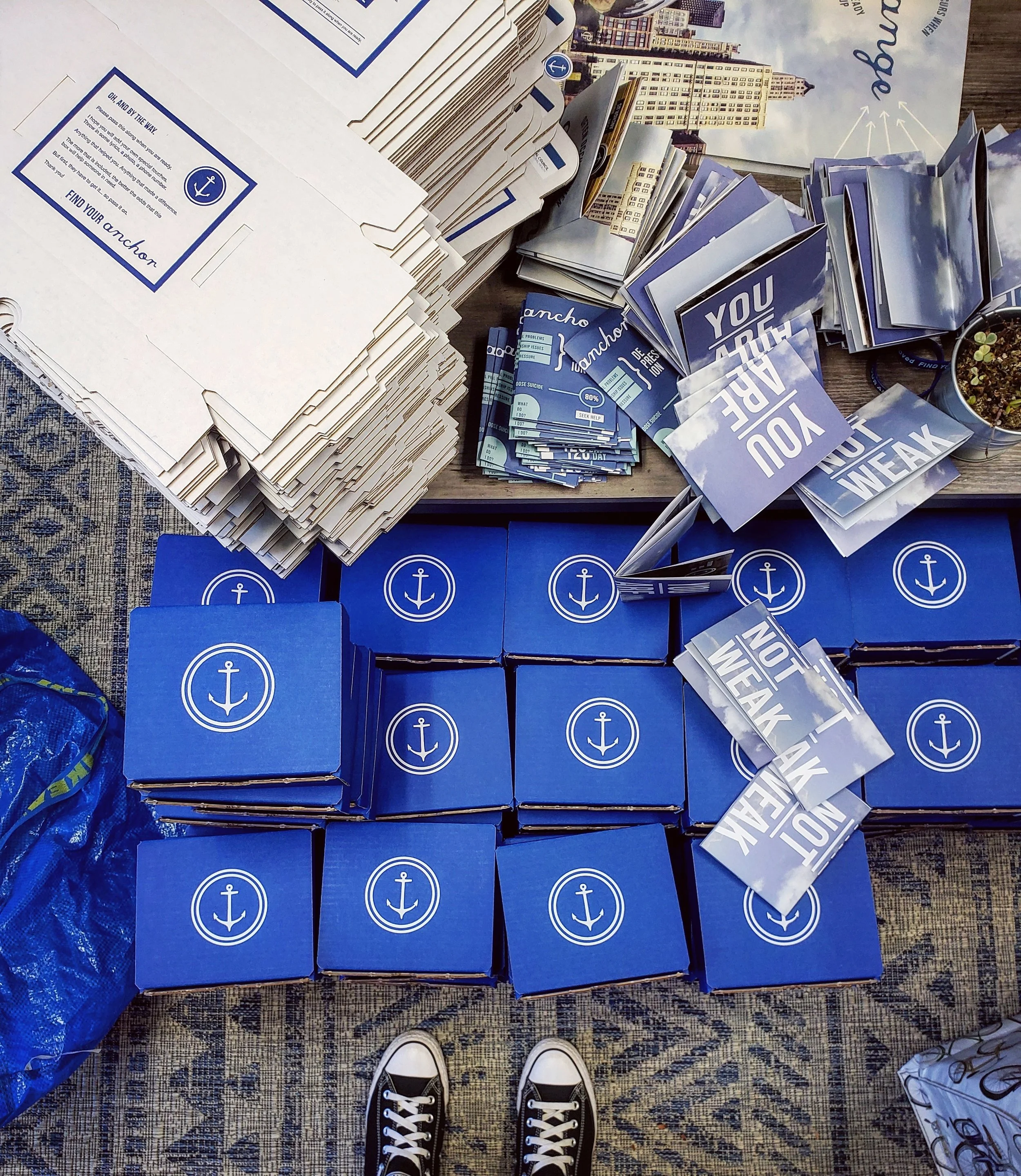
That’s philosophy made physical. And it works precisely because it doesn’t pretend that information is the same thing as belonging.
When we designed #IGetIt, our goal was to build something with a similar instinct, just in a different medium. We asked people to share what keeps them grounded. A place, an object, a ritual, a pet. Something real, something theirs. And we asked them to put it into the world publicly, as an act of saying, ”I get it; I also feel overwhelmed, anxious, depressed, whatever the adjective may be. Here is something that helps me in case it helps you too.”
Thirteen nonprofits joined us. Hundreds of people downloaded our mental health resource guide. Corporate partners Calm and BetterHelp contributed free subscriptions and therapy vouchers to remove the financial barriers that so often permeate people’s journeys to accessing care. The Impact Lounge conversations we hosted became something we didn’t entirely anticipate. They were less like webinars and more like proof that when people who care about the same things get in a room together, even a virtual one, something shifts.
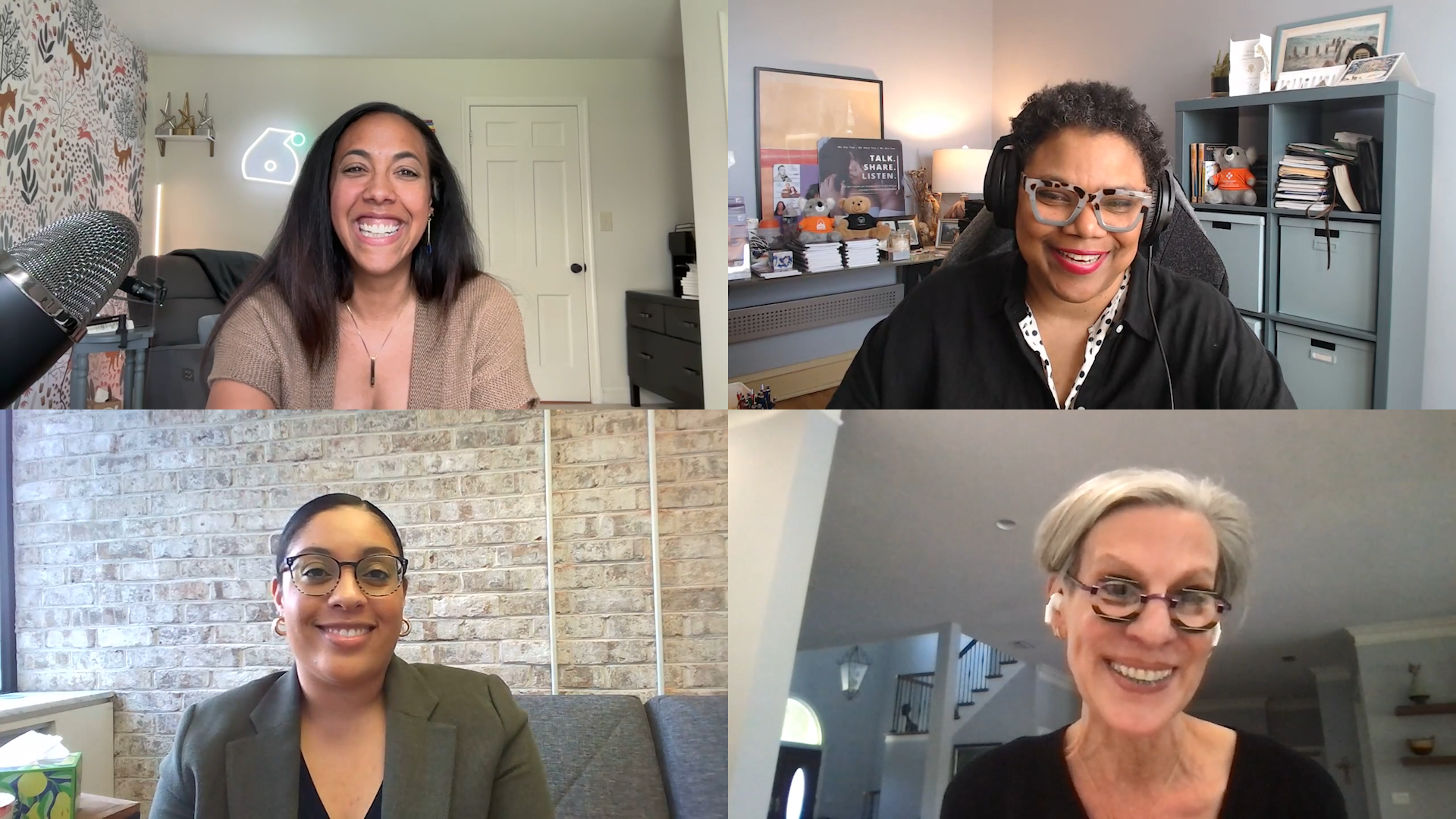
#IGetIt Impact Lounge, “Peer Power: Redefining Support Through Lived Experience”
None of it fixed anything permanently. That’s not the point. The point is that connection, no matter how small or seemingly imperfect, does something that awareness alone cannot do.
This year, we partnered with Born This Way Foundation on their Generation Be There campaign. At the center of it is the Be There Certificate: a free, self-paced online course that gives people the knowledge and confidence to support someone in their life who is struggling with their mental health. No clinical background required. No jargon. Just practical, accessible tools for having the conversations most of us quietly fear and dread.
Our team members completed it ourselves. That matters to me. It's easy to amplify a message, it's different to actually do the thing.
What I love about the Be There Certificate as a model is that it names something the sector often skirts around: a lot of people want to show up for the people they love, but they don't know how. They're afraid of saying the wrong thing, so they say nothing. A course like this takes that disconnect and provides a tangible, accessible solution. It makes connection feel possible in a moment when it might otherwise feel too risky.
That's something we think about a lot at SixDegrees.org. We believe courses and workshops are one of the most underleveraged tools in the nonprofit sector, not as professional development checkboxes, but as genuine conduits for connection and confidence. The nonprofit space is full of people who care deeply and feel underprepared. Who want to have hard conversations about mental health, about justice, about community, and don't know where to start. Structured learning, when done well, gives people a place to start. It builds the kind of quiet confidence that makes someone more likely to reach toward another person instead of away from them.
We're putting that belief into practice in a real way right now, and we can't wait to share more soon.
What this means for the sector
The organizations doing this work most effectively are often the ones you’ve never heard of. They’re grassroots, underresourced, operating in specific communities with specific people, and they’ve figured something out that larger, better-funded institutions sometimes miss: that the most powerful mental health intervention available is another human being who shows up.
Find Your Anchor runs on the belief that strangers can love each other. SixDegrees.org exists because of the belief that connection is contagious. These things encapsulate the strategy.
If you work in this sector and you’re building your next awareness campaign, I’m not here to tell you to stop. I’m here to ask one question worth sitting with: when the month is over, what are the people you reached left with? Information? Or the feeling that someone actually sees them?
In closing
Awareness opens a door. Connection walks through it with you.
This May, I'm grateful for every organization that built something people could hold onto long after the calendar flipped. We're committed to doing the same, and we're just getting started.
In the meantime, our #IGetIt resource guide lives at sixdegrees.org/igetit. The resources don't expire just because the month did. Additionally, you can play a role in improving the mental health of your community. Make a gift today to join us in our work to equip young people with life-saving resources year round. SixDegrees.org/give.
