
Cause, Meet Creative: The Impact of Purpose, Produced
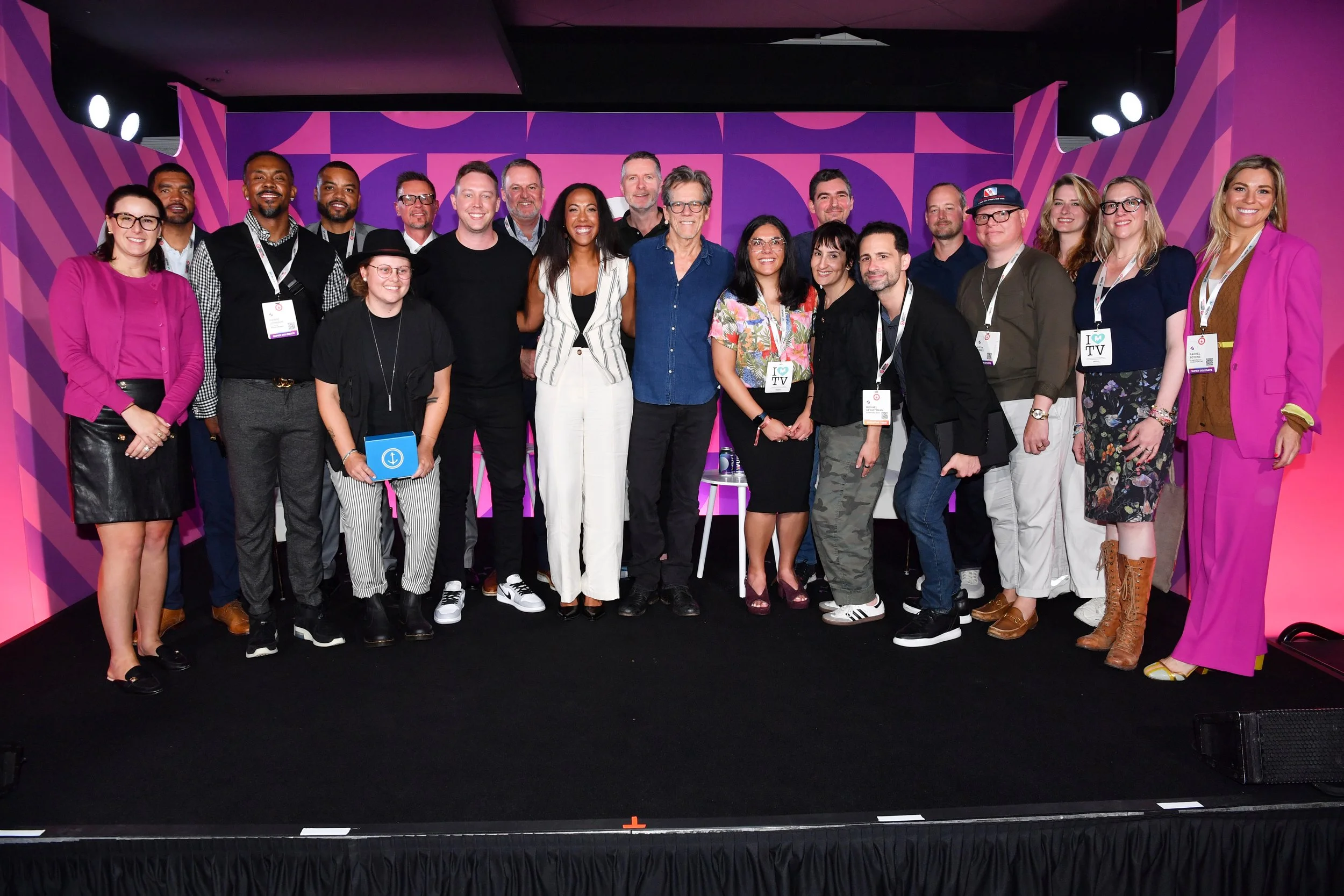
The nonprofit and agency partners of the inagural Purpose, Produced cohort celebrate at Advertising Week New York
There's a persistent set of myths in the nonprofit sector revolving around the idea that storytelling is a nice-to-have. That a grassroots organization doing frontline, community-based work can't compete with the slick campaigns of Fortune 500 brands. That visibility is simply out of reach without a marketing budget to match.
Purpose, Produced exists to prove that not only is this a myth, but that when viewed through the right lens, the truth benefits creative workforces as well as nonprofits.
The result of a groundbreaking partnership between SixDegrees.org and Advertising Week, Purpose, Produced pairs mission-driven nonprofits with world-class creative agencies for a simple, radical proposition: what if the most deserving causes got the same quality of storytelling as the most well-funded brands? Purpose, Produced launched in April 2025, and the inaugural cohort brought together six nonprofits and six agencies to create six campaigns that debuted between October 2025 and January 2026. Every campaign is built entirely pro bono, made possible by agencies, directors, producers, media partners, and creators donating their best work, not their leftover bandwidth.
Collectively, the campaigns generated more than 355 million media impressions and over $3.7 million in estimated media value. Across every partner, Purpose, Produced drove concrete, measurable increases in volunteers, donations, partnerships, community engagement, and website traffic. The creative community showed up, and in doing so, changed lives.
Found at See: Crispin for Find Your Anchor
Find Your Anchor aims to support those who may be struggling and de-stigmatize conversations surrounding suicide and mental health through prevention, awareness, and education.
When conversations about mental health become heavy, clinical, or distant, many people tune out. The instinct for most awareness campaigns is to lean into urgency and portray the darkness in order to convey its stakes. Crispin and Find Your Anchor chose a different path.
Their campaign, Found at See, opens not with crisis but with sensation. Sunlight scattering across water. The sound of wind chimes. Flowers blooming unexpectedly. The film's voiceover, performed with aching tenderness by singer Julianna Riolino over music donated by sound design house Singing Serpent, immerses the viewer.
The creative insight at the heart of Found at See is deceptively simple: mental health anchors are already around us, we just have to start looking. Rather than dramatizing despair, the campaign reframes wellness as something grounding and accessible, a truth built not from grand gestures but from the sensory texture of everyday life.
Crispin's visual system follows a formula as intuitive as it is elegant: I see + I hear + I feel = my anchor. The mixed-media treatment, designed like a grassroots seek-and-find, draws on found art to create something simultaneously cinematic and communal. Many of the anchors hidden in the imagery are drawn from the real life of Find Your Anchor founder Ali Borowsky. Everyone will notice a different anchor, and that's the point.
The campaign was designed from the ground up for flexibility and longevity. Assets were built digital-first to accommodate donated media opportunities as they emerged. Crispin leveraged its in-house creator platform to secure influencer content, expanding organic reach. A suite of OOH placements, managed through media partner Talon and 13 billboard companies, brought Found at See into the physical world in a way few nonprofit campaigns ever achieve.
The campaign appeared across 10 U.S. cities, from Times Square to the Las Vegas strip, generating nearly 290 million impressions. Industry press took notice, with Ad Age, Campaign US, Little Black Book, and SHOOTOnline all covering the work and noting the seamlessness with which branded content principles were applied to a cause-driven mission.
All this visibility made it possible for Found At See to save lives. 704 lives, to be exact.
After seeing Found At See, 704 individuals reached out to Find Your Anchor requesting direct help. These were people who had no prior awareness of the organization before encountering the campaign. These weren't passive viewers but rather people in pain who saw something in a subway station or on a billboard and were inspired to ask for help. In a field where the gap between awareness and action is often immense, 704 direct help requests proves that a well-told story, placed in the right context, can be the difference between someone suffering alone and someone asking for help.
Re:framing Mentorship: VERSUS for The Pulse of Perseverance Project (P3)
The questions that haunt young people navigating their futures rarely have easy answers. What's my path? Where do I belong? Who can I become? For students growing up without access to networks of privilege, without family connections to professional worlds, without proximity to people who have already blazed trails, those questions can feel not just unanswered but unanswerable.
The Pulse of Perseverance Project (P3) was built on the belief that mentorship is one of the most powerful forces for changing that equation. Their mobile-first platform matches students with mentors in seconds, opening doors to scholarships, internships, job opportunities, and the kind of guidance that students from under-resourced communities rarely receive. The app removes the barriers that traditionally gatekeep mentorship and puts it in the palm of your hand.
When VERSUS was paired with P3 through Purpose, Produced, they made a choice that elevated the work from functional to moving. They didn't explain the platform. Instead, they built a film that let audiences feel what the platform makes possible.
Re:framing Mentorship opens in the emotional territory that P3's students know intimately: the uncertainty, the longing for direction, the sense that opportunity is somewhere out there, but the map is missing.The campaign shows that mentorship can change that story.
Shots Magazine and Motionographer both covered the campaign's release, praising the rare combination of commercial craft and social purpose. As a result of Re:framing Mentorship, P3 saw 300% organizational growth, scaling its platform to 900 actively engaged mentors and mentees. Re:framing Mentorship also opened new doors to institutional credibility, funding, and reach. P3 was selected as a strategic partner for the Obama Foundation's My Brother's Keeper initiative.
Second Responders: The Variable for Trauma Intervention Programs, Inc. (TIP)
We have words for the people who rush toward emergencies: first responders, essential workers, heroes. We don’t have language for the people who arrive after the sirens fade.
That invisible labor belongs to Trauma Intervention Programs, Inc., a network of trained civilian volunteers who respond alongside police, fire, and medical teams to provide on-scene emotional support after a sudden tragedy. TIP volunteers don't fix what's broken. Instead, they stay, listen, and help people take the next breath when everything feels impossible.
For most of the communities TIP serves, the concept of a second responder is entirely unknown. The Variableunderstood that the creative challenge here wasn't persuasion, but rather introduction. The work needed to make a new concept feel immediately, viscerally necessary. It needed to make an audience feel, before they fully understood it rationally, that something had been missing from their model of how communities care for each other.
Second Responders meets that challenge with restraint. There is no dramatization or crisis footage. The visuals focus instead on the quiet moments that follow tragedy. The uniform of TIP volunteers is placed beside those we already recognize as essential. The message is clear: what these volunteers do is not supplemental, it is essential. Compassion is not secondary to rescue, it is rescue.
The campaign meaningfully expanded public awareness of the second responder role in communities that had never encountered the concept while sparking a notable increase in volunteer interest and engagement, the clearest possible measure of whether a message about service has truly landed. TIP's work is deeply local and relational; the volunteers who come forward because of this campaign will spend years showing up for families at their worst moments, in the hours after tragedy when almost everyone else has moved on.
Some impact doesn't fit neatly into an impression count. The impact of Second Responders lives in the rooms we never see: the ones where a TIP volunteer sits with a family until they can breathe again.
Where Our Gals At: Rain for GlamourGals Foundation
Loneliness doesn't always look like being alone. Sometimes it looks like having stories to tell and no one to tell them to. Sometimes it looks like a young person craving connection they can't quite name. Sometimes it looks like two generations living parallel lives, just one conversation apart.
GlamourGals is closing that distance. Their model is simple and quietly radical, bringing high school volunteers into senior living communities for conversations, companionship, and care, centered around the shared experience of beauty. A manicure is used as a doorway, where a shared laugh over nail polish becomes a portal into genuine human connection.
Where Our Gals At, a recruitment campaign created by Rain, leans directly into the warmth and specificity of what GlamourGals' volunteers experience: the laughter, the shared stories, the moments of genuine recognition between a teenager and a woman four times her age who turns out to have more in common than either expected.
Rather than scripting an experience, the creative allows real interactions to lead. The result is intimate, joyful, and grounded in lived humanity. The campaign title itself is a call-out and an invitation, playful on the surface and weighted with genuine community purpose underneath.
The press response reflected the campaign's resonance. PR Newswire announced the launch, highlighting the pro bono collaboration and its focus on uplifting isolated seniors through authentic creative storytelling. MediaPost covered the campaign's impact on intergenerational connection. Both pieces did what the campaign itself accomplished: they made people want to be part of what GlamourGals is doing.
GlamourGals now operates in 170 communities through youth-led chapters across the country. Demand for new chapters grew so dramatically following the campaign that the organization implemented a waitlist to manage the surge in interest, a problem that is, in every sense of the word, a beautiful one to have.
DarkSky One: Bray & Co for DarkSky International
For more than a century, civilization has measured progress by how brightly it can light the night. The assumption is so deeply embedded in our idea of advancement that it rarely gets examined. More light equals more safety equals more progress. DarkSky International exists to challenge this assumption, and DarkSky One, the campaign created by Bray & Co through Purpose, Produced, made that challenge unavoidable.
The most innovative of the inaugural Purpose, Produced campaigns, Bray & Co transformed DarkSky into an automotive brand and launched a car designed not against the night, but with it. DarkSky One is a concept vehicle optimized for darkness, reducing unnecessary glare, preserving night vision, and minimizing light pollution's disruption of ecosystems and human health. It’s a physical argument that sustainable progress and innovation don't have to compete and that true evolution means learning to live in balance with the natural world rather than simply overpowering it.
The campaign leans into atmosphere over spectacle. The reveal of DarkSky One at the Detroit Auto Show turned heads not because it demanded attention but because it offered something rarer than novelty: a different vision of what the future could look like.
The automotive and design press responded with the kind of sustained curiosity the campaign deserved. CarBuzz spotlighted the nighttime-first design philosophy. Gear Patrol explored how the concept pointed toward a more thoughtful approach to driving after dark.
The campaign generated 25 million earned media impressions valued at over $900,000, extraordinary reach for a nonprofit operating at the intersection of science, sustainability, and public behavior change.
The most consequential outcome wasn't measured in impressions, but in policy.The visibility and public conversation generated by DarkSky One contributed to a very real outcome: U.S. Congress directed federal regulators to formally examine the dangers of bright LED headlights. This was in direct response to public pressure that DarkSky International had been building for years and that DarkSky One helped amplify into the mainstream. A nonprofit idea, told through a concept car and a cinematic campaign built entirely pro bono, reached the halls of Congress.
DarkSky One demonstrates that it’s possible for a creative campaign to transcend awareness and become action at the highest level.
Girlhood: Duncan Channon for SHERO Foundation
Sex trafficking is one of the most difficult social crises to communicate about effectively. The instinct to shock, horrify, and confront audiences with the violence of the crime often produces the opposite of the intended effect. The subject feels too dark, too distant, too overwhelming for ordinary people to feel they have a role in addressing it.
SHERO Foundation, a survivor-led nonprofit combating sex trafficking in southern Nevada and beyond, understood this problem intimately, and Duncan Channon found a creative approach that solved it with extraordinary elegance.
Girlhood doesn't show the crime. It shows what the crime takes away.
The campaign captures a diverse group of girls simply being girls: taking selfies, making TikToks, walking to school, laughing with friends. The footage is joyful, specific, and alive. Meanwhile, the voices of real survivors play over these images. Women who were trafficked as girls describe what was quietly taken from them long before anyone noticed something was wrong.
The contrast is deliberate and devastating. What's stolen through trafficking isn't just safety, but childhood itself. The film doesn't ask audiences to witness harm, but it does ask them to recognize what deserves protection and what they might do to protect it.
The campaign was produced with support from the creative community and town of Fort Walton Beach, Florida, where much of the work was filmed.
Girlhood rolled out across social, digital, online video, CTV, OOH, and broadcast TV placements, a media mix that gave a small survivor-led nonprofit the footprint of a national brand. Billboard placements through Lamar Outdoor generated approximately 4.5 million weekly impressions.
By campaign's end, Girlhood had delivered over 41 million total impressions valued at more than $547,000. Behind those numbers are meaningful, measurable increases in volunteers, partnerships, donations, community engagement, and website traffic for an organization that has been doing this vital work largely outside of public view.
For a survivor-led nonprofit in southern Nevada, the ability to reach 41 million people with a message this precise and to translate that reach into the concrete organizational growth that sustains their work is transformational, and it’s what Purpose, Produced was built to do.
The Power of Six: What Purpose, Produced Proves
Step back from any individual campaign to look at what Purpose, Produced accomplished as a whole, and the picture is something remarkable.
Over 355 million impressions.More than $3.7 million in estimated media value. Six nonprofits, all of them grassroots, under-resourced, doing vital work largely outside the spotlight, equipped with the creative tools, media placements, and storytelling craft that typically requires millions of dollars and years of institutional infrastructure to access.
Even still, the aggregate statistics, impressive as they are, don't fully capture the series of specific transformations this first-of-its-kind initiative made possible:
A suicide prevention nonprofit reached 704 people in crisis who had no idea it existed and asked for help.
A mentorship platform grew 300% and earned recognition from the Obama Foundation, bringing its mission into rooms it had never been able to enter before.
A network of emotional support volunteers gained a public vocabulary for the work they do and volunteers who will spend years doing it.
An intergenerational connection organization expanded to 170 communities and had to implement a waitlist because more people wanted to participate than could be accommodated.
A light pollution nonprofit generated enough public pressure that the United States Congress directed federal regulators to act.
A survivor-led anti-trafficking organization brought its message to 41 million people and saw measurable growth in every dimension of its operational capacity.
None of this would have happened without the creative industry showing up, not with spare bandwidth and leftover time, but with full creative commitment. The agencies and partners who made Purpose, Produced possible didn't give these nonprofits the scraps of their attention; they gave them their best work.
Purpose, Produced is built on the conviction that storytelling is fundamental to the success of grassroots nonprofits and that the creative industry has a role to play, not just in selling products, but in shaping which stories get told. Beyond that, it’s built on the belief that purpose-driven work benefits not only the nonprofits but the creative community as well.
As Scott McClure, Senior Vice President of Creative at Rain, reflected, “There’s no better creative stretching than working in the nonprofit space because the dynamic is just different. It is good for teams; it's a morale builder, it’s a skill builder, it’s a way to bring in other viewpoints. Creativity and design can do so much good in the world, and being able to apply that deep career know-how toward helping support a worthy cause? It really can make real change happen. It’s about capturing imaginations and minds and hearts, and honestly, it does deliver a different level of satisfaction than a lot of the other work you’ll do in the industry. It’s kind of a win-win to get involved.”
What Comes Next
The work that Purpose, Produced made possible in its first year is already informing what comes next. The initiative is returning with refinements: an advisory board that includes past nonprofit and agency partners, deeper brand integration opportunities, and structural adjustments designed to ensure that every collaboration feels like the full-treatment engagement these missions deserve rather than a pro bono afterthought.
Strategic creativity isn't a luxury for the causes that need it most. It is, as the numbers from Purpose, Produced's inaugural year make clear, a lifeline.